
Project Cosmos
Interactive Educational Portal for Online Learning Platform
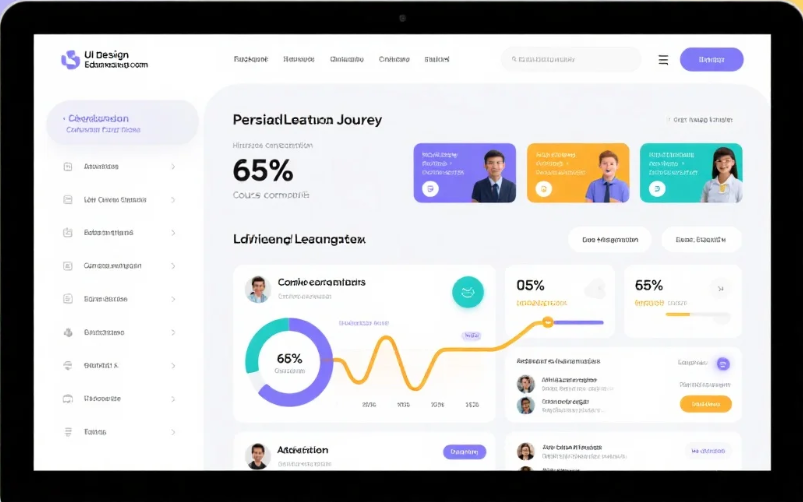
Overview
An established online education company wanted to transform their static course catalog into an immersive, interactive learning ecosystem. The goal was to create a personalized learning journey platform that would adapt to each student's pace, learning style, and knowledge gaps while providing educators with powerful tools for content creation and student progress tracking.
Challenge
The existing platform suffered from high dropout rates (65% course completion) and low engagement metrics. The user interface was confusing for both students and instructors. Content delivery was one-size-fits-all without personalization. The platform couldn't support interactive elements like coding exercises, virtual labs, or collaborative projects. Additionally, the backend couldn't scale to handle the growing user base of 500,000+ learners.
Our Solution
We built Cosmos as a full-stack learning platform using React with Redux for state management on the frontend, and Node.js with MongoDB on the backend. We implemented an adaptive learning engine that uses spaced repetition algorithms and machine learning to personalize content delivery. The platform includes interactive coding environments, virtual science labs using WebGL, peer collaboration tools, and AI-powered tutoring assistants.
- Adaptive Learning Paths: Dynamic course sequencing based on real-time assessment of student mastery.
- Interactive Coding Labs: Browser-based IDE supporting 15+ programming languages with auto-grading.
- Virtual Science Labs: 3D simulations for physics, chemistry, and biology experiments using Three.js.
- Collaborative Learning Spaces: Real-time group projects with shared whiteboards and video conferencing.
Client
Cosmos Education Inc.
Industry
EdTech & Online Learning
Technologies
React, Redux, Node.js, MongoDB, Socket.io, Three.js, Docker, Kubernetes
Timeline
7 Months
Results
The Cosmos platform increased course completion rates from 35% to 72% within the first year. Student engagement metrics (time on platform, assignment submissions, peer interactions) increased by 210%. The adaptive learning system reduced the time to mastery by 38% compared to traditional linear courses. Instructor productivity increased as automated grading and analytics reduced administrative workload by 25 hours per week. The platform successfully scaled to handle 1.2 million concurrent users during peak enrollment periods. Client revenue increased by 185% year-over-year due to improved retention and expanded course offerings.
Back to All Portfolio